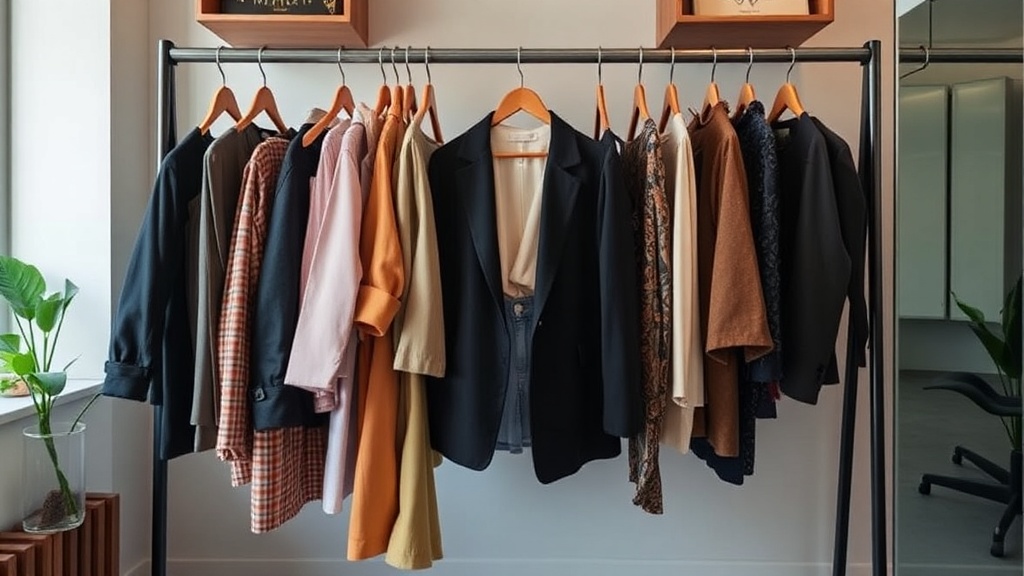
How to Build a 30-Piece Capsule Wardrobe That Works Year-Round

This post breaks down exactly how to curate, shop for, and maintain a 30-piece capsule wardrobe that functions through every season. You'll learn which specific items earn their spot, how to layer for temperature swings without buying duplicates, and where to find quality pieces in Oakland that won't fall apart after six washes. A smaller closet saves money, eliminates decision fatigue, and actually makes getting dressed easier—not more restrictive.
What is a 30-piece capsule wardrobe?
A 30-piece capsule wardrobe is a curated collection of clothing—shoes included—that mixes and matches to create dozens of outfits. The count typically excludes underwear, sleepwear, workout gear, and special-occasion items. (Jewelry and accessories are fair game, though most people keep those minimal too.) The goal isn't deprivation; it's intentionality. Every piece has a purpose, and nothing sits in the back of the drawer with tags still attached.
The "30 pieces" figure comes from Project 333, a minimalist fashion challenge created by Courtney Carver. Her framework suggests dressing with 33 items or less for three months. Many people adapt that to 30 items year-round by choosing seasonless fabrics and silhouettes. Here's the thing: the number isn't magic. Some people settle on 28; others prefer 35. Thirty just happens to be the sweet spot where variety and simplicity overlap.
Theo Andersson started Minimal Wardrobe after years of watching closets overflow with items that never got worn. The lesson was simple: more options don't equal better style. A 30-piece wardrobe forces clarity. If a jacket doesn't work with at least three outfits, it doesn't make the cut. That level of scrutiny feels intimidating at first, but it quickly becomes liberating.
What pieces should be in a year-round capsule wardrobe?
The core pieces include two pairs of well-fitting jeans, three tailored trousers, five tops in neutral tones, two blazers, three dresses, two skirts, one quality coat, four pairs of shoes, and five layering items like cardigans and lightweight jackets. Color consistency is what makes it work. If everything hangs in the same tonal family—think navy, charcoal, cream, camel, and olive—almost every top will pair with almost every bottom.
That said, basics don't have to be boring. The Everlane Organic Cotton Crew in white is a reliable staple, but so is the Reformation Classic Shirt in a subtle stripe or plaid. For denim, the Levi's 501 Original Jeans and a darker wash pair like the AGOLDE '90s Pinch Waist cover casual and slightly dressed-up scenarios. A wool coat from Cuyana or a tailored trench from COS transitions across seasons better than a puffy insulated jacket ever will.
Here's a look at six foundational items that show up in nearly every successful year-round capsule. These aren't vague suggestions—they're specific products with track records for durability and fit.
| Category | Item | Why It Works Year-Round |
|---|---|---|
| Bottoms | Levi's 501 Original Jeans | Heavy denim holds its shape; pairs with tees, blazers, and sweaters alike. |
| Bottoms | Vince High-Rise Trousers | The silk-wool blend breathes in summer and layers cleanly over tights in winter. |
| Tops | Everlane Organic Cotton Crew | Thick enough to wear alone in spring; slim enough to tuck under a cashmere knit. |
| Outerwear | COS Belted Trench Coat | Water-resistant cotton with enough room for a cardigan or light scarf underneath. |
| Footwear | Dr. Martens 1461 Leather Shoes | Polished enough for offices; sturdy enough for Oakland's hills and uneven sidewalks. |
| Footwear | Veja Campo Sneakers | Clean white leather improves casual outfits without looking like gym gear. |
Worth noting: shoes eat up closet real estate fast. Most capsule veterans limit themselves to four pairs total. That usually means one casual sneaker, one flat or loafer, one ankle boot, and one heel or dress shoe. Footwear tends to be the most expensive category, which is why limiting quantity actually improves quality. Instead of ten mediocre options, you can afford one excellent pair of ankle boots—like the Blundstone 063—and resole them when needed. The same logic applies to sneakers. One $150 pair of leather Vejas will outlast three pairs of $50 canvas shoes.
How do you build a capsule wardrobe without buying everything new?
You start with a strict closet audit. Pull every item out, try it on, and ask whether it fits today, whether it works with at least three other pieces you own, and whether you'd reach for it on a busy Monday morning. If the answer to any question is no, it goes into a sell, donate, or storage pile. Most people discover they already own 40% of what they need.
The catch? Filling gaps can get expensive if you buy everything at once. A smarter approach is to purchase one high-quality piece per month. Start with the categories you wear most—usually good denim and a versatile coat. Brands like Everlane publish factory details and cost breakdowns, which makes it easier to spot actual quality versus marketing fluff. For secondhand scores, The RealReal and Poshmark carry pre-owned Cuyana, Eileen Fisher, and Vince at steep discounts.
Here's the thing: you don't need a "capsule wardrobe starter pack" shipped to your door in a single box. That defeats the point. The best capsules evolve over six to eight months as you test what you actually wear. Theo Andersson built the Minimal Wardrobe closet over two years, replacing fast-fashion mistakes with pieces that survived repeated washing and Oakland's unpredictable weather shifts.
Once the audit is complete, institute a one-in-one-out rule. For every new piece that enters the closet, something else must leave. This prevents the gradual creep back to clutter. (It also makes you think harder about whether that sale item is really worth sacrificing a current favorite.) Most people find that this single habit keeps their count stable without requiring another massive purge.
How do you make 30 pieces work across all four seasons?
Layering is the entire strategy. In a temperate climate like Oakland—or any city with mild winters and warm summers—the same base pieces rotate year-round; only the layers change. A short-sleeve button-down from AYR works solo in July, then gets tucked into high-waisted trousers with a cashmere crewneck over it in January. Light fabrics in neutral colors layer more easily than heavy prints or bulky knits.
Invest in two or three "bridge" pieces that span seasons. A merino wool cardigan—the one from Universal Standard is excellent—regulates body temperature and looks as natural with a cotton skirt as it does over a turtleneck. A denim jacket or unstructured blazer, say the Madewell Oversized Jean Jacket, adds structure without trapping heat. Scarves, tights, and thin turtlenecks underneath dresses extend their wear from March straight through November.
Oakland's weather is a capsule wardrobe's dream. Morning fog rolls in at 55 degrees; afternoons hit 75 by two o'clock. That daily swing means layers aren't optional—they're the whole point. A lightweight merino crew from Uniqlo's Heattech line adds warmth without bulk, and it packs down to nothing if the sun breaks through. Keeping a scarf in your bag (the one from Cuyana's soft wool collection works well) covers you for 90% of Bay Area temperature drops.
That said, climate extremes do require compromise. If you live somewhere with brutal winters or humid summers, you might need a small seasonal storage bin for heavy parkas or linen sundresses. Those don't count against your 30 if they're true seasonal specialists. The year-round capsule handles 85% of your life; the other 15% gets a pass.
Where should someone shop for quality basics in Oakland?
Oakland has a surprisingly strong selection of independent boutiques and ethical labels that align with capsule wardrobe principles. McMullen on Lakeshore Avenue carries established designers like Rachel Comey and Totême, plus smaller lines that emphasize longevity over trend cycles. The staff there actually understand fit and fabric weight—rare in an era of self-checkout and algorithmic recommendations.
For denim specifically, Levi's is headquartered just across the Bay Bridge in San Francisco, and many Oakland shops stock exclusive washes you won't find at suburban malls. Temescal Alley is worth a walk for curated vintage; the sellers there tend to stock '90s wool trousers and leather belts that outlast most contemporary equivalents. Lush Boutique in the Grand Lake neighborhood offers locally made jewelry and improved basics at mid-range prices.
Buying locally in Oakland has another advantage: you can feel the fabric before committing. Online photos lie about weight and texture. A shirt that looks substantial on screen might be tissue-thin in person. Walking into McMullen or any of the Temescal Alley shops lets you test drape, seam quality, and button tightness with your own hands. That tactile check cuts return rates dramatically and builds a closet you actually trust.
If online shopping is more practical, Cuyana ships from San Francisco and designs everything with "fewer, better" as the stated mission. Their Classic Structured Tote and Silk Tee are capsule staples that have been in production for years—not just one season. The return policy is generous enough that you can try multiple sizes at home, which matters when you're buying pieces meant to last five years or more.
A 30-piece wardrobe isn't about restriction. It's about removing the noise so the good stuff gets worn. When every piece in the closet earns its place, getting dressed becomes faster, cheaper, and—honestly—more fun. The best-dressed people in Oakland aren't wearing more clothes; they're wearing the right ones more often.
Start small. Audit the closet this weekend. Pick one gap to fill next month. In six months, you'll wonder why you ever needed the rest.