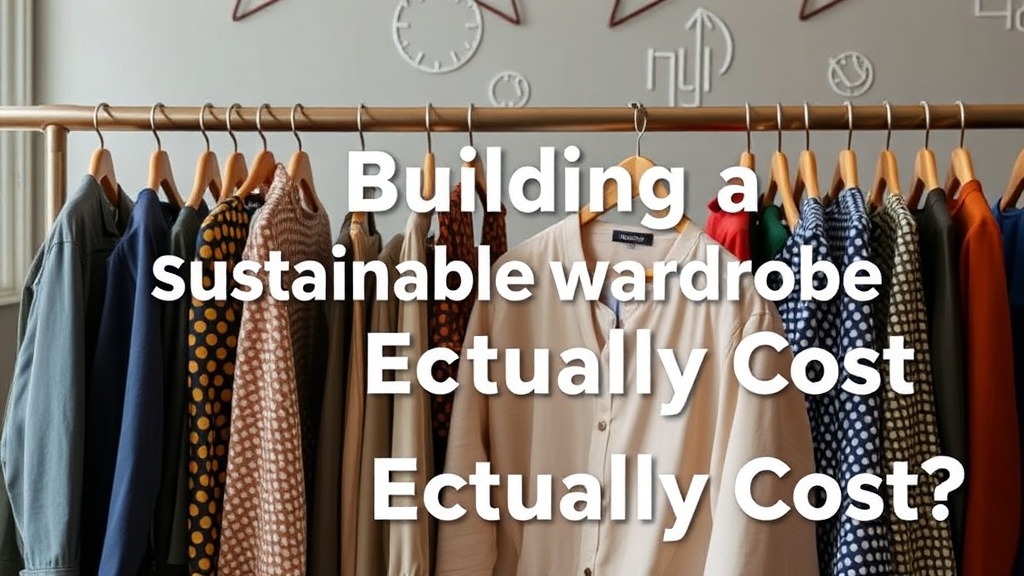
What Does Building a Sustainable Wardrobe Actually Cost?

What does sustainable fashion mean for your budget?
This post breaks down the real costs of building an ethical, long-lasting wardrobe—no greenwashing, no judgment. You'll learn how to calculate cost-per-wear, identify which pieces deserve investment, and shop in ways that align with both your values and your bank account. The goal isn't perfection. It's making informed choices that reduce waste without draining your savings.
The fashion industry produces 10% of global carbon emissions—more than international flights and maritime shipping combined. Meanwhile, the average American buys 68 garments per year and wears each item only seven times before discarding it. Something isn't working. But here's the uncomfortable truth: sustainable fashion often carries a higher price tag upfront, and not everyone can afford $200 organic cotton tees or $400 ethically-made jeans. The good news? Building a wardrobe that lasts—and aligns with your values—doesn't require a massive budget. It requires a shift in how you think about cost.
Why is cost-per-wear the metric that actually matters?
Most of us evaluate clothing purchases based on the sticker price. That $25 fast-fashion sweater feels like a bargain compared to the $120 cashmere alternative. But this math ignores the reality of use. Cost-per-wear divides the purchase price by the number of times you'll actually wear something. That $25 sweater worn twice costs $12.50 per wear. The $120 version worn 100 times costs $1.20 per wear—and often looks better at wear 80 than the cheap version did fresh from the bag.
Calculating cost-per-wear requires honest assessment. Ask yourself: Will I reach for this weekly? Does it work with at least three other pieces I own? Will I still want to wear it in two years? Be ruthless. A beautiful silk blouse that sits in your closet because you're afraid to stain it has infinite cost-per-wear. A well-made cotton button-down you throw on without thinking becomes cheaper with every wear.
This approach flips the shopping script. Instead of asking "Can I afford this?"—which often leads to buying three cheap things instead of one good one—you ask "Will I use this enough to justify the cost?" Sometimes the answer is yes for a $200 pair of jeans you'll wear 150 times. Sometimes it's no for a $40 trendy top you'll wear twice.
Which wardrobe pieces deserve the biggest investment?
Not every item in your closet needs to be investment-grade. Strategic spending matters more than uniform quality. Focus your budget on foundation pieces—those you wear most often and that do the heaviest lifting in your wardrobe.
Outerwear deserves top priority. A well-constructed wool coat or quality leather jacket worn daily for five years justifies nearly any price point. Look for natural fibers (wool, cashmere, leather), reinforced seams, and quality hardware. These pieces face the elements, take the most wear, and are hardest to replace cheaply without obvious quality drops.
Footwear follows closely. Your shoes absorb impact, weather, and miles of walking. Poorly made shoes hurt your feet, wear out in months, and often can't be repaired. A $200 pair of leather boots that can be resoled multiple times outlasts four $60 pairs that go to landfill. The environmental cost difference is stark—the EPA reports that 11.3 million tons of textile waste ended up in landfills in 2018, with shoes contributing significantly.
Bottoms matter more than tops. Pants and skirts experience more friction, stretching, and washing than shirts. Denim quality varies enormously—cheap jeans stretch, fade, and tear at stress points. Quality denim develops character while maintaining structure. For workwear, wool trousers or well-made chinos in classic cuts serve you for years.
Trend pieces, statement items, and experimental colors? Buy these cheap or secondhand. You're testing whether they fit your style long-term. If you find yourself reaching for that thrifted red blazer constantly, upgrade to a quality version. If it sits untouched, you've spent $12 learning something, not $200.
How can you build sustainably without spending a fortune?
The most sustainable garment is one that already exists. Secondhand shopping—thrift stores, consignment shops, online resale platforms—offers quality brands at fraction of retail prices. A $300 Madewell jacket becomes $45. Vintage pieces often feature superior construction to modern equivalents. The environmental impact? Near zero new production.
Clothing swaps with friends refresh your wardrobe for free. Repair cafes and basic sewing skills extend garment life dramatically. Learning to replace a button, fix a hem, or mend a small tear saves pieces from premature disposal. Organizations like Fibershed document how extending a garment's life by just nine months reduces its carbon, water, and waste footprints by 20-30%.
Buy less, but buy with intention. The "30 wears" rule—committing to wearing any new purchase at least 30 times—eliminates impulse buys. Unsubscribe from fast-fashion marketing emails that trigger FOMO. Wait 48 hours before purchasing anything over $50. Most desire fades; genuine need persists.
Care for what you own properly. Wash less frequently (most clothes don't need cleaning after every wear). Use cold water. Air dry when possible. Store seasonal items properly. These habits cost nothing and dramatically extend clothing lifespans.
When is fast fashion actually the ethical choice?
This question makes sustainable fashion advocates uncomfortable, but it matters. If you're between jobs, supporting a family on limited income, or dealing with unexpected expenses, a $15 pair of work pants from a fast-fashion retailer might be what allows you to keep your job. Judging individual purchases without understanding financial context helps no one.
Sustainability includes accessibility. The movement loses credibility when it suggests everyone can—or should—spend $200 on jeans. What matters is the broader pattern: buying mindfully when possible, caring for what you own, and avoiding the disposable mindset that treats clothing as temporary.
Start where you are. If your budget allows one quality piece per season, start there. If you're rebuilding a wardrobe from scratch after a major life change, secondhand shopping and strategic fast-fashion basics can form a foundation you upgrade over time. The goal isn't purity—it's progress toward systems that value durability, fair labor, and reduced environmental harm.
"The most expensive thing you can do is buy cheap clothes that don't last. The second most expensive thing is buying expensive clothes you never wear."
Building a wardrobe that lasts requires thinking beyond the transaction. It means understanding your actual needs, recognizing quality construction, and accepting that good things—properly cared for—take time to find and money to acquire. But the math works. A smaller collection of pieces you love, that fit well, and that survive years of wear ultimately costs less than constant replacement of disposable trends. More importantly, it frees you from the exhausting cycle of shopping, discarding, and shopping again. You open your closet to options that work—not chaos that demands more shopping to solve.