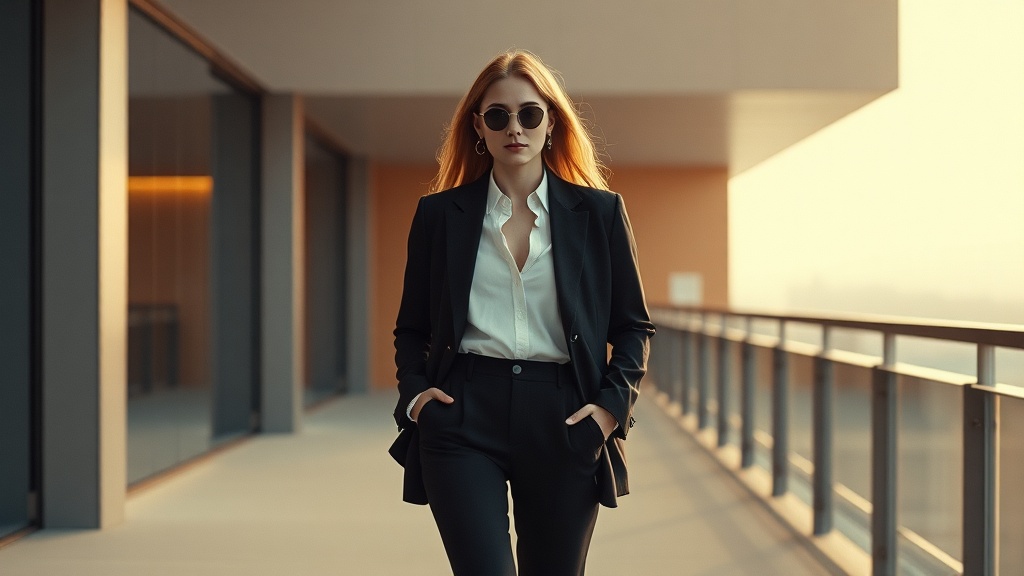
Why Do Minimalist Outfits Sometimes Look Forgettable?

You open your carefully edited closet—everything fits, nothing's worn out, yet somehow your outfits feel flat. You're not imagining it. A minimal wardrobe can absolutely drift into forgettable territory, and it's one of the most common frustrations people face after decluttering. This post covers the specific visual techniques that separate striking minimal outfits from the ones that blend into the background. You'll learn how to create interest without adding clutter, why texture beats color for impact, and the small adjustments that make simple pieces look deliberate rather than default.
What Separates Memorable Minimalism From Basic Dressing?
The difference between a minimal wardrobe that looks considered and one that reads as "I didn't try" usually comes down to three elements—texture, proportion, and tension. Most people focus exclusively on color when building a capsule wardrobe, choosing safe neutrals that coordinate easily. But color is just one variable. A head-to-toe black outfit can look incredibly dynamic or completely forgettable depending on how you handle everything else.
Texture creates visual depth even in a monochromatic look. Pair a crisp cotton button-down with fluid silk trousers and you've got contrast. Add a chunky knit cardigan over a smooth camisole and there's something for the eye to register. The key is mixing weights and finishes within the same color family. Matte fabrics next to something with subtle sheen. Woven textures against knits. These combinations create the illusion of complexity without requiring additional garments.
Proportion is the second factor. Wearing items with similar silhouettes—straight-leg pants with a boxy top, or a fitted dress with a fitted jacket—can make an outfit look static. The most interesting minimal looks play with scale. Oversized coats over slim trousers. Wide-leg pants with cropped, close-fitting tops. These juxtapositions create movement and shape, which reads as intentional styling rather than just "getting dressed."
Tension—the push and pull between elements—is harder to define but you know it when you see it. It's the combination of structured and soft, masculine and feminine, formal and casual. A silk slip dress with heavy boots. A tailored blazer over a thin cashmere turtleneck. These slight contradictions signal that someone made choices, not just grabbed the first available items.
Why Does Texture Matter More Than Color in Small Wardrobes?
When you're working with a limited palette—and most minimal wardrobes lean heavily on neutrals—texture becomes your primary tool for creating visual interest. Color catches attention first, but texture is what holds it. More importantly, texture doesn't complicate your wardrobe logistics the way additional colors do. A cream-colored cable knit and a cream-colored fine-gauge sweater serve different visual purposes while coordinating with exactly the same items in your closet.
Consider the difference between a standard cotton t-shirt and one in a slubbed linen blend. Same cut, same color, completely different effect. The linen version catches light differently, has more surface variation, and reads as more considered. This is why fabric awareness separates sophisticated minimal dressing from the basic variety. Natural fibers generally offer more textural variety than synthetics—wool has tooth and bounce, silk has liquid drape, cotton can range from crisp poplin to soft jersey.
The most effective minimal wardrobes include pieces with deliberate surface interest. A tweed-style jacket in a neutral tone. Ribbed knitwear. Slightly rumpled linen. These aren't flashy items—they don't demand attention—but they prevent the eye from sliding right past your outfit. When every piece in your closet has some textural character, even simple combinations look styled.
Vogue's fashion coverage regularly highlights how designers use fabric manipulation and texture to create impact in collections that rely on minimal color palettes—techniques that translate directly to personal wardrobes.
How Much Visual Interest Can You Add Without Breaking the Rules?
There's a legitimate fear that adding "interest" to a minimal outfit means compromising the minimalism—adding patterns, colors, or accessories that clutter rather than enhance. The trick is understanding that visual interest and visual noise aren't the same thing. A single well-chosen element can create more impact than five competing ones.
The 70/30 rule works well here. About 70% of your outfit should be "quiet"—solid colors, classic silhouettes, minimal detailing. The remaining 30% can carry the visual weight. That might mean one piece in an interesting texture, one proportion play, or one carefully chosen accessory. You're not trying to make every element special. You're creating a backdrop and then adding a focal point.
Color accents can work in a minimal wardrobe, but they're most effective when they're consistent and intentional. A wardrobe built on navy, grey, and white with burgundy as the only accent color feels cohesive. The same wardrobe with random pops of different colors in every outfit feels scattered. Pick your accent—one or two—and commit to it. This creates a signature look, which is the opposite of forgettable.
Accessories function as punctuation in minimal outfits. They don't need to be statement pieces (though they can be). A leather belt that breaks up a column of color. A single piece of sculptural jewelry. An interesting bag shape. These small additions signal intention without adding bulk to your closet. The key is choosing accessories with the same editing standards you apply to clothing. One excellent belt beats three mediocre ones.
Where Should You Focus Your Attention When Getting Dressed?
When you're staring at a limited selection of clothes, the details you can control become more important. Fit is the obvious one—minimal pieces need to fit precisely because there's nowhere for imperfections to hide. But beyond fit, there are specific styling choices that elevate simple pieces.
The way you tuck your shirt matters. A full tuck, a half-tuck, a French tuck—each changes the silhouette and the proportions of your outfit. Rolling sleeves to expose wrists (which reads as elegant) or pushing them up for volume. Cuffing jeans to show ankle or leaving them long. These micro-adjustments change how pieces relate to each other and to your body.
Hemline relationships are particularly important in minimal dressing. There's a visual rhythm to where your clothes hit—knee, hip, waist, ankle. When hemlines stack awkwardly (a top hitting exactly at the widest part of your hip, pants breaking at the wrong point on your shoe), outfits look off even when the individual pieces are fine. Paying attention to where garments begin and end relative to each other creates flow.
The relationship between pants and shoes deserves special mention. A minimal wardrobe often includes fewer shoe options, which makes getting this right more critical. The same pair of trousers looks different with loafers versus sneakers versus boots—not just in formality, but in where the pant leg falls and how the silhouette continues. Small alterations to pant length can completely change how an outfit reads.
Who What Wear offers extensive guidance on proportion and styling details that help simple pieces look their best, with particular attention to fit and accessorizing.
Is There a Formula for Making Simple Pieces Look Intentional?
There isn't one formula, but there is a mindset: every choice should be active, not passive. The "I just threw this on" look only works when it's actually constructed. That means making decisions about sleeves, hems, and tucking rather than letting garments fall where they may. It means choosing which piece in your outfit will have the interesting texture or the stronger silhouette. It means knowing whether today's look is about ease or structure.
One practical approach is the "third piece" concept adapted for minimal wardrobes. In traditional styling advice, the third piece is the blazer or cardigan that completes an outfit of top plus pants. For minimal dressing, think of the third piece as whatever adds the interest—maybe it's the texture contrast, the proportion play, or the single accessory. You're always looking for that element that transforms two basic items into a considered look.
Another approach is to identify your "uniform"—the silhouette that works best for your body and lifestyle—and then build variations within it. If your uniform is straight-leg pants with a tucked top and a cropped jacket, you can execute that in endless fabric combinations and color variations. The consistency makes getting dressed easier; the variations in texture and proportion keep it interesting.
The goal isn't to look like you're trying hard. It's to look like you're thinking clearly. A forgettable outfit is often the result of not making decisions—grabbing the obvious combination, leaving everything untucked, ignoring proportions. A memorable minimal outfit results from making a few specific choices and executing them with precision.
The Cut's fashion section regularly explores how personal style develops within constraints, offering examples of minimal dressing that prioritizes impact over accumulation.
The best minimal wardrobes don't look minimal from the outside. They look complete. The person wearing them looks like they have exactly what they need—and know exactly how to use it. That's the difference between forgettable and striking. It's not about having more. It's about seeing more possibility in what you already own.