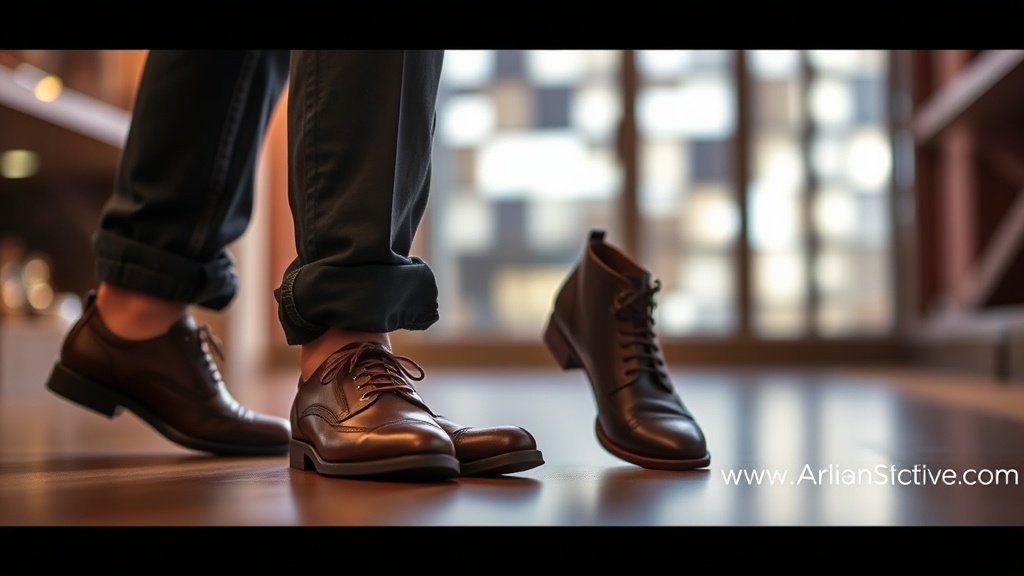
Curating a Signature Footwear Collection Through Quality and Versatility

Imagine standing in front of a closet filled with dozens of pairs of shoes, yet feeling like you have nothing to wear because none of them match your current outfit or the weather. This is the result of buying for trends rather than utility. A signature footwear collection focuses on a small number of high-quality, versatile pieces that work across various settings—from a casual walk in Oakland to a formal dinner. This guide breaks down how to select footwear based on material quality, seasonal necessity, and stylistic longevity.
How Do I Choose High-Quality Footwear?
You should prioritize natural materials like full-grain leather, suede, or high-grade canvas and look for construction methods like Goodyear welting. Synthetic materials often look cheap after a few months and lack the ability to be repaired. When you buy a pair of boots from a brand like Red Wing Shoes, you aren't just buying a product; you're investing in a piece that can be resoled multiple times.
The difference between a "fast fashion" shoe and a quality one is often invisible to the untrained eye, but it becomes obvious after six months of wear. Cheaply made shoes use "cemented" construction—basically glue—which means once the sole wears down, the shoe is trash. High-quality footwear uses stitching. This allows a cobbler to fix the shoe, extending its life by years.
Look at the following indicators when shopping:
- Leather Quality: Avoid "genuine leather" (which is often a low-grade split leather) and look for "full-grain" or "top-grain."
- Sole Construction: Check if the sole is stitched to the upper or just glued on.
- Hardware: Zippers and buckles should feel heavy and move smoothly, not snag or feel flimsy.
- Lining: A leather lining breathes much better than a synthetic one, preventing odor and discomfort.
It’s a bit of an upfront cost—higher, actually—but it aligns with the principles of extending garment longevity. If you spend $300 on a pair of boots that lasts a decade, you're spending much less per wear than someone buying $60 boots every single year.
What Are the Essential Shoe Categories for a Minimalist?
A functional collection requires five specific categories: a versatile sneaker, a formal leather shoe, a weather-resistant boot, a casual loafer or slip-on, and a seasonal sandal or specialized footwear. This rotation ensures you are never caught off guard by a change in dress code or weather.
The goal is to avoid "specialty" shoes that only work for one specific niche. You don't need a dozen different types of sneakers. You need one pair of clean, white leather sneakers (like the Common Projects Achilles Low style) that works with denim, chinos, and even slightly more formal trousers.
| Category | Primary Use Case | Example Style | Versatility Score | |
|---|---|---|---|---|
| Minimalist Sneaker | Daily errands, casual outings | White Leather Low-top | High | 9/10 |
| Leather Boot | Cold weather, rugged/casual look | Chelsea or Lace-up Boot | Medium-High | 7/10 |
| Derby or Loafer | Office, dinners, social events | Penny Loafer or Derby | Medium | 6/10 |
| Technical Shoe | Hiking, heavy rain, outdoor activity | Gore-Tex infused boot | Low (Niche) | 4/10 |
The catch is that people often overbuy the "technical" category. Unless you are actually hiking the Pacific Crest Trail, you don't need a dedicated hiking boot sitting in your closet for 360 days a year. Instead, find a boot that is water-resistant enough for a rainy day in the city but looks sharp enough for a casual brunch.
One mistake I see frequently is buying shoes that are too "loud." A bright neon sneaker or a shoe with heavy branding might feel fun now, but it will be hard to pair with a minimalist wardrobe. Stick to neutral tones—navy, tan, black, white, and olive—to ensure everything matches.
How Much Should I Spend on a Single Pair of Shoes?
The cost of high-quality footwear typically ranges from $150 to $400 for a reliable, mid-tier option that will last several years. While you can find cheaper alternatives, the cost-per-wear usually favors the more expensive, durable option. It is better to own one pair of $250 leather boots than three pairs of $80 synthetic boots that fall apart by winter.
I often get asked if it's worth buying designer footwear. The answer depends on what you're paying for. If you're paying for the logo, you're wasting money. If you're paying for better construction and superior leather, it's a different story. Brands like Alden or even high-end workwear brands provide immense value because they focus on the build rather than the hype.
Consider the "Cost Per Wear" (CPW) formula. If you buy a pair of high-end loafers for $300 and wear them twice a week for three years, the CPW is incredibly low. A $50 pair of shoes that lasts one season and requires replacement every six months actually becomes more expensive over time. This is a fundamental part of building a wardrobe that works without the regret of constant repurchasing.
Here is a quick breakdown of what to expect at different price points:
- $50 - $100: Primarily synthetic materials, glued construction, limited repairability.
- $150 - $300: Genuine leather, better stitching, potential for resoling, good durability.
- $400 - $600: High-grade full-grain leather, superior craftsmanship, excellent longevity.
Don't feel pressured to go straight to the $500 mark. There is a "sweet spot" in the mid-range where you get the best balance of quality and price. You're paying for the ability to maintain the item, not just the initial aesthetic.
One thing to remember: footwear is the foundation of your silhouette. A poorly chosen shoe can make a great outfit look bottom-heavy or uncoordinated. If your trousers are tailored perfectly but your shoes are beat-up, cheap sneakers, the entire look falls apart. It's about the cohesion of the whole.
Maintenance is also a non-negotiable part of owning a quality collection. If you buy leather shoes, you need a basic kit: a brush, a cream, and a polish. A simple five-minute routine once a month can keep a pair of boots looking new for a decade. It's not just about looking good; it's about respect for the objects you own.
If you find yourself constantly replacing your shoes, it's time to stop looking at the price tag and start looking at the material composition. The more you understand the construction, the less you'll be swayed by seasonal trends that lead to a cluttered, inefficient closet. Focus on the build, and the style will follow naturally.